Land Rover Series Serial Numbers
Apr 23, 2014. I need a little help identifying the gearbox that have my old LR Series III 88'(1972) 2.25 petrol. I need clues on how to identify its or difference from the ones of the LRS II, like serial numbers plate or where it is, how look in the exterior the ones from II or are alike. Facebook/Land Rover Series Puerto Rico. This is one of the most useful little tools on the Internet for Land Rover VIN numbers. Just go to the CalVIN website and check your own vehicle. See example listing for a 110 turbo diesel Land Rover as checked on CalVIN. CalVIN, the Land Rover VIN CALculator SALLDHAB7FA370090.
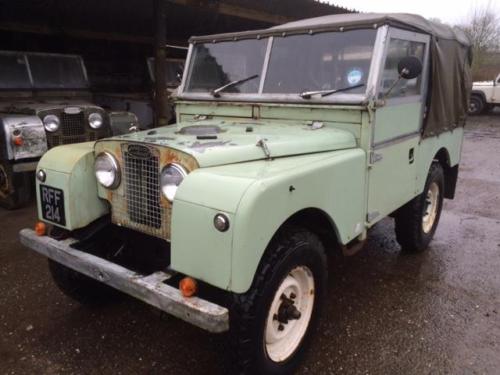
Land Rover Series 109 For Sale
Land Rover engine numbers | |
Most older Land Rovers have had at least one engine change in the past. Land Rover engine designs did not change often, but there are a couple of key changes which may not be immediately obvious just looking at an engine, and for which the serial number can be very invaluable. The most obvious ones are: - Major redesign of the 2286cc petrol engine in 1961, when the Series IIA replaced the Series II - Diesel engine redesigned and increased from 2052cc to 2286cc at the same time - Change from 3 bearing to 5 bearing crank on 4 cylinder engines around 1980 - 2286cc petrol replaced by 2495cc in 1985 - the new engine has hardened valve seats and will run on unleaded A couple of other points worth knowing in relation to engine numbers. Firstly, the 2286cc petrol and diesel engines had interchangeable cylinder blocks. It is not uncommon for engine reconditioners to mix and match components, so you may find a diesel engine with a petrol serial number or vice versa. This should not be a problem on 5 bearing engines as the petrol and diesel used the same crankshaft, but on the earlier 3 bearing engine, petrol crankshafts were cast, and much weaker than the forged items used in diesel engines. If you put a petrol crankshaft in a diesel engine, it will run fine but may break under load. So if you find a diesel engine which has a petrol serial number on it, you need to be sure that the crankshaft has been replaced with the correct diesel type. To confuse matters more, some unscrupulous firms have been known to put petrol cranks in reconditioned diesels, and hope they last until after the warranty runs out. So with a 3 bearing diesel of unknown history, the safest check is to remove the sump and take a look inside. (Sump gaskets are very cheap, and you can clean all the old gunge from the bottom of the sump at the same time.) If the crank has a large letter 'P' cast into it, and is of smooth appearance, it is a petrol crank. If it is slightly rough looking and has no letter 'P' it's a diesel crank. Compression ratios: although Land Rover used different serial numbers for low compression (7:1) and high compression (8:1) four cylinder petrol engines, the cylinder heads are interchangeable between the two, so the engine number is not a reliable guide to the actual specification. The compression ratio is cast into the side of the cylinder head. Also worth knowing is that Land Rover introduced a new cylinder block for the 2.5 Turbodiesel (part no. ERR479) from engine number 19J27515C. I have not been able to confirm, but suspect that this block was strengthened to get round the block cracking problems for which the 2.5TD had become notorious. Certainly the later (1989-90) 2.5TD seems more durable than the earlier ones. If I were rebuilding one of these engines I would try to get hold of a late block just to be sure - I certainly wouldn't bother rebuilding an earlier one. Finally, whereas the 2286cc petrol and diesel blocks have the same part number, on 2495cc engines they are different (and the TD is different again). So I do not know whether these blocks are interchangeable. Finding your serial number: On four cylinder engines, the engine number is stamped on a flat area just forward of and below the front exhaust port, between the exhaust manifold and the water pump housing. On V8s it can be seen by looking down between number 2 and 3 exhaust outlets on the left hand (dipstick) side. Serial number location on 4 cylinder (arrowed) Serial number location on V8 (head removed) 10Gxxxxxx Series III petrol 3528cc V8 10Hxxxxxx 90/110 petrol 2286cc 8:1 CR 10Jxxxxxx 90/110 diesel 2286cc 11Gxxxxxx Series III petrol 3528cc V8 (detoxed) 11Hxxxxxx 90/110 petrol 2286cc 8:1 CR (detoxed) 11Jxxxxxx 90/110 diesel 2495cc late military spec (19J block) 11Lxxxxxx Defender 200TDI diesel 2495cc 12Gxxxxxx Series III petrol 3528cc V8 (Australia) 12Jxxxxxx 90/110 diesel 2495cc 12Lxxxxxx Discovery 200TDI diesel 2495cc manual transmission 13Hxxxxxx 90/110 petrol 2286cc 7:1 CR 13Lxxxxxx Discovery 200TDI diesel 2495cc automatic transmission 141xxxxxx Series II petrol 1997cc 146xxxxxx Series II diesel 2052cc 14Gxxxxxx 90/110 petrol 3528cc V8 14Jxxxxxx 90/110 diesel 2495cc (ex London taxi) 14Lxxxxxx Range Rover Classic 200TDi diesel 2495cc manual transmission 151xxxxxx Series II petrol 2286cc 156xxxxxx Series II diesel 2052cc 15Gxxxxxx 90/110 petrol 3528cc V8 (detoxed) 15Jxxxxxx Diesel 2495cc (ex Sherpa van) 15Lxxxxxx Range Rover Classic 200TDi diesel 2495cc automatic transmission 16Lxxxxxx Discovery/Defender 300TDI diesel 2495cc 17Hxxxxxx 90/110 petrol 2495cc 8:1 CR 19Jxxxxxx 90/110 turbodiesel 2495cc 21Lxxxxxx Discovery/Defender 300TDI diesel 2495cc 23Lxxxxxx Discovery/Defender 300TDI diesel 2495cc 236xxxxxx Series IIA petrol 2286cc (fitted to 88 inch airportable) 241xxxxxx Series IIA petrol 2286cc 8:1 CR 251xxxxxx Series IIA petrol 2286cc 7:1 CR 252xxxxxx Series IIA petrol 2286cc 7:1 CR 253xxxxxx Series IIA petrol 2286cc 7:1 CR 271xxxxxx Series IIA diesel 2286cc 276xxxxxx Series IIA diesel 2286cc 286xxxxxx Series IIA petrol 2286cc (Forward Control) 300xxxxxx Series IIA petrol 2625cc (Forward Control) 325xxxxxx Series IIB petrol 2286cc (Forward Control) 330xxxxxx Series IIB petrol 2625cc (Forward Control) 335xxxxxx Series IIB diesel 2286cc (Forward Control) 345xxxxxx Series IIA petrol 2625cc 361xxxxxx Series III petrol 2286cc 8:1 CR 5-bearing 364xxxxxx Series III petrol 2286cc 7:1 CR 5-bearing 366xxxxxx Series III diesel 2286cc 5-bearing 895xxxxxx Series III diesel 2286cc 3-bearing (fitted to 88 inch airportable for export) 901xxxxxx Series III petrol 2286cc 8:1 CR 3-bearing 902xxxxxx Series III petrol 2286cc 8:1 CR 3-bearing 903xxxxxx Series III petrol 2286cc 8:1 CR 3-bearing 904xxxxxx Series III petrol 2286cc 7:1 CR 3-bearing 906xxxxxx Series III diesel 2286cc 3-bearing 941xxxxxx Series III petrol 2625cc 951xxxxxx Series III petrol 2286cc 3-bearing (fitted to 88 inch airportable) 956xxxxxx 101FC petrol 3528cc V8 961xxxxxx 101FC petrol 3528cc V8 For V8s fitted to Rover saloons and Range Rovers, try the V8 Powered website: There may be a few gaps in the above information, particularly Army vehicles and TDi 200/300 engines (although the latter can be easily identified without needing serial numbers). Any information to plug the gaps will be gratefully received. Covering Norfolk, Suffolk, Cambridgeshire, Breckland, Fenland Nearest Towns: Thetford, Brandon, Bury St Edmunds, Newmarket, Cambridge, Diss, Mildenhall, Lakenheath, Stowmarket Servicing, repairs, restoration, MoT test preparation, mechanical overhaul, welding, rewiring, timing belt changes, clutch and gearbox replacement, brake system repairs, steering box replacement and much more |
Land Rover Series Engine Serial Numbers
An attempt to date Series IIA models by changes in suffix letters relative to each other. The dates are the issue dates of the Service Newsletter announcing the change. Changes where a date is unknown are appended at the bottom on the list.
| Date | Suffixes | Item(s) Changed | |||
|---|---|---|---|---|---|
| Chassis | Engine | Gearbox | Axle | ||
| Oct 1961 | A | A | A | A | Introduction of Series IIA |
| Feb 1962 | A | A | A | A | Introduction of 7/16' studs for steering levers (replaces 3/8' studs). Commenses with RHD 88' 24101876a, RHD 109' 25101786a and LHD 109' 25400867a. |
| May 1962 | A | A | A | A | Introduction of steady strip for the fan cowl (Petrol 4 cyl) from cowl to battery box |
| Jul 1962 | A | A | A | A | Clamping bars for injectors modified to eliminate spot facing. Commencing with diesel engine 27102760a onwards |
| Jul 1962 | A | B | A | A | Introduction of a vertical drive shaft with a reamed bush in place of the split bush. Commences with engine 25119953b (Petrol 4 cyl) onwards |
| Sep 1962 | A | B | B | A | Introduction of large intermediate and lay shafts. Introduction of hydrostatic clutch (no adjustment needed) Introduction of combined oil filler and level plugs (eliminates top fil plugs) |
| Nov 1962 | A | C | B | A | Introduction of wax type thermostatfor diesel engines (replaces methyl-alcohol bellows thermostate). Introduction of stronger clutch springs [All models] |
| Mar 1963 | A | C | B | A | Suffix letters switch from lower case to upper case |
| Mar 1963 | B | D | B | A | Introduction of shorter full-flow engine oil filter [2L diesel, 2.25L diesel, 2.25L petrol] Cup type core plug replaces hexagon plug and joint washer on inlet manifold [2.25L diesel]. Shape of front branch pipe of exhaust manifold has been simplified to ease manufacture [2.25L Diesel]. Introduction of thinner joint washers (0.015') in place of 0.062' on water pump and front cover to increase the rigidity of the water pump adn front cover mounting (all) Introduction of wax type thermostat as standard (replacing methly alcohol bellows type [2.25L petrol]. Introduction of 9.5' clutch on 109' FCs for improved performance [FC 2.25L engine suffix B and later]. Introduction of non-adjustable type ball joints on teh bell crank to carburetter contgrol rod and the use of linkage clips on the control rod between the relay shaft and the carburetter relay, replacing ball joints and ball ends [all 2.25 petrol 88s and 109s]Introduction of shackle [ins with 9/16' diameter thread and shackle plates modified to suit, to prevent possibility of broken shakel pins. [all] Introduction of re-designed headlamps. Stop-tail and number plate illumination lamp replaces two separate lamps, except on Forward Control models. Side Lamps, flasher lamps and rear lamps re-designed to eliminate bezel.[all] Introduction of lower ration gearbox and transfer box for 109 FC models Introduction of 3/8' fixings in steering box to replace 5/16' fixings [all] Steering ration revised from 15.6 to 19.6 straight ahead ration and full lock ratio altered from 23.8 to 29.9 on Forward Control models Introduction of larger universal joints on propellor shafts. (was Hardy Spicer Series 1300 with 2 15/16' width and new is Hardy Spicer Series 1310 width 3 7/32' [all] |
| Sep 1963 | B | D | C | A | Gearbox Ratios |
| Dec 1963 | B | D | C | A | 25D4 Distributor starting with Engine 25159746 (Petrol 4 cyl) |
| Jan 1964 | B | D | C | A | Cast iron rear bearing housing [all] Light switch key switch, Ballast resistor 2BA [Diesel] Locker lid turnbuckle Semi-circular, Apron panel curved |
| Jan 1964 | B | D | Engine foot reinforced. Engine 25152571, 27110202 (4 Cyl) | ||
| Feb 1964 | B | D | B | A | ?? Strengthened tie rod bracket bell housing starting with Gearbox 25170529B |
| Mar 1964 | B | D | C | B | Strengthened axles, Steering relay filler deleted |
| Sep 1964 | B | D | C | B | 251 Series of Gearbox Numbers used up, start with 2520001C |
| Feb 1965 | B | F | C | B | One piece oil level rod. 251 Series Engine Numbers used up. Start with 25200001F. Welded bonnet striker |
| Jun 1965 | B | G | C | B | Blade type distributor drive shaft (Petrol 4 cyl) |
| Apr 1966 | C | G | ?? Front cover no studs water pump (Diesel) | ||
| Apr 1966 | C | H | ?? Front Engine cover no studs water pump (Petrol 4 cyl) | ||
| Apr 1966 | C | D | ?? Strengthened layshaft | ||
| Apr 1966 | C | ?? Centre horn push, Steering wheel all | |||
| Apr 1967 | D | J | E | Negative earth, Rocker brackets, Zenith Carb, Single grommet bell housing, Cranked handbrake (Petrol 4 cyl) | |
| May 1967 | D | H | E | Negative earth. Single grommet bell housing. Cranked handbrake. Control panel dash (Diesel) | |
| May 1967 | D | A | E | New 6 cylinder model (Petrol 6 cyl) | |
| Jun 1967 | B | ?? Zenith Strom carb?? (Petrol 6 cyl) | |||
| Dec 1967 | D | J | 9 1/2' Clutch standard (Diesel) | ||
| Feb 1968 | D | CV Master cylinder 88: wheelbase | |||
| Mar 1968 | E | K | Lip oil seals, Timing pointer on front [Petrol] Dust proof breather [Diesel] Flanged injectors [Diesel] Starter motor [Diesel] oil catcher gearbox, Grease packed hubs | ||
| Apr 1968 | E | Square solenoid (Petrol 4 cyl), Door locks | |||
| May 1968 | E | Push on advance distributor (Petrol 6 cyl) | |||
| Oct 1968 | E | Black interior trim | |||
| Nov 1968 | E | Road wheel small offset FV607510 109' Wheelbase | |||
| Dec 1968 | E | E | Breather on rear of inlet manifold [Diesel] No peg rr mainshaft starting with Gearbox Number 25378396E, Narrow sills | ||
| Mar 1969 | F | New fuel filter (Petrol 6 cyl) | |||
| Apr 1969 | F | Brake switch, Vertical Hand control [Diesel] Round wiper motor, CV Master Cylinder [109' Petrol 4 cyl] | |||
| Apr 1969 | G | Headlamp in guard, 8:1 Compression (Petrol 4 cyl) Suffix A, 8fl flasher, Servo on brake pedal (Petrol 6 cyl) | |||
| Jun 1969 | G | Large wheel nuts 9/16 studs, Heat shield seat base [Diesel & Petrol 6] [Serial Numbers in F given] | |||
| Oct 1969 | G | Heat shield distributor (Petrol 6 cyl), Spire nut door hinges | |||
| Jan 1970 | Plastic fan cowl (Petrol 4 Cyl) | ||||
| Apr 1970 | G | Thick road wheel 109' wheelbase | |||
| Jun 1970 | G | 7/16 Handbrake relay | |||
| Nov 1970 | F | ?? Sealed clutch withdrawl ? | |||
| Nov 1970 | H | ?? 16mm road wheel studs, Flat bottom diff | |||
| Oct 1971 | A | A | A | A | Introduction of Series III |
| B | Gearbox Housing Reverse ratio changed | ||||
| B | Clutch bleed pipe deleted all alternator | ||||
| B | Facet fuel pump (Petrol 6 cyl). Exhaust pipe 3 bolt (88' Diesel). Delete heat shield (88' Diesel) | ||||
| C | Rear fuel tank (109' Petrol 4 cyl). Lock ring fuel sender (all 109') Exhaust pipe (109' Diesel). Delete heat shield (109' Diesel). Inboard expi (4 cyl Petrol). Exhaust silencer straight (4 cyl Petrol) Sealed breather (Perol 4 cyl). Viscous fan (Petrol 6 Cyl). Clip top rocker HIF carb Air pump distributor alt mounts (Petrol 6 Cyl). 3 bolt exhaust manifold (Diesel 4 cyl). 90654451C (Diesel 4 cyl). Sound proofing Eng viscous fan (Diesel 4). | ||||
| D | 3 bolt exhaust manifold (109' Diesel) Delete LWR breather shield Ducellier? Distributor (Petrol 4 cyl) | ||||
| E | Shield oil filler New top rocker with oil filler blank side plate (Petrol 4 cyl) | ||||
| B | Circlip Rover differential | ||||
| D | 1/2 inch U bolts? | ||||
| E | Long thread ball joints? | ||||
Originally from the Ottawa Valley Land Rovers newsletter, September, 1995. Updated from LR Service Newsletters